Find us on Google+ Astronomy Box: moon
Showing posts with label moon. Show all posts

10 October 2013

ISS Passing The Moon


Well, it's not much but here is my capture of the International Space Station passing close to the moon in the sky. It seems we might be a little too far south where we live to get a view of the ISS passing in front of the face of the moon. Shot these frames hand held, with my Nikon DSLR attached to my small Apochromatic refractor.


P.s. You might want to full screen it to see it properly.

30 April 2013

Patchwork moon with the RC8 & QHY5 cam

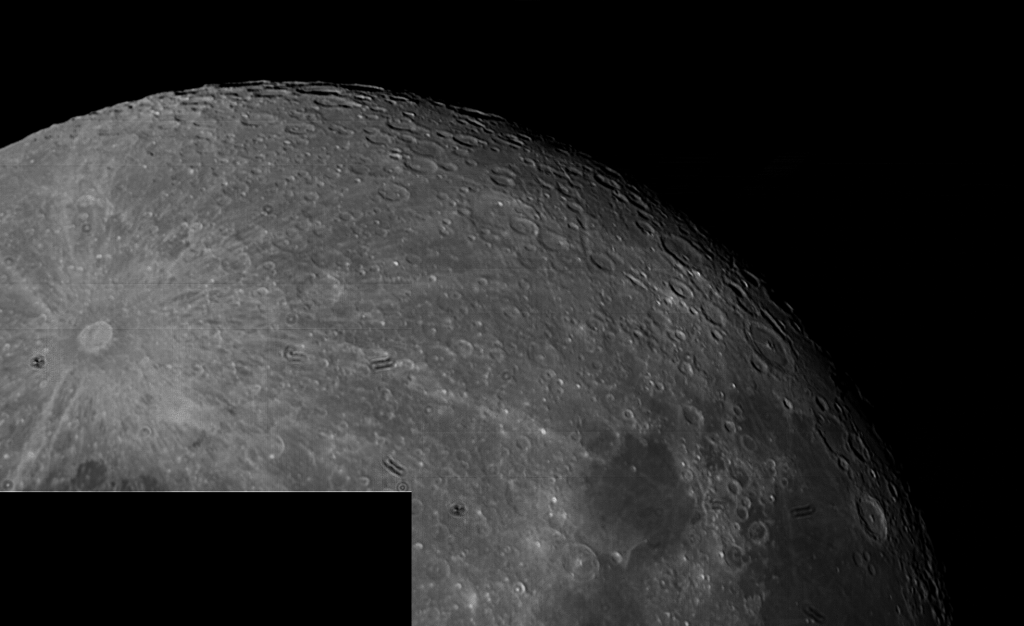
I have been dying to try out my new QHY5 guide camera with a bit of planetary and lunar image stacking. I've heard they give great results and I also wanted to put my 8" ritchey chretien to the test. Being a specialised scope for deep sky imaging I wasn't sure how well it would perform. I'm happy to report that it performs quite well. Below the result of two 2sec videos, stacked and stitched (stacked in registax, stitched in Photoshop)

As you can see, some dust on the telescope mirror did show up. Nothing a few flat frames won't fix, though. Next time I'm going for the whole moon!


OTA: 8" Ritchey Chrétien
Camera: QHY5
Mount: HEQ5
Exposures: 2x2sec .avi video

Processing: Registax
Post-processing: Photoshop

30 September 2012

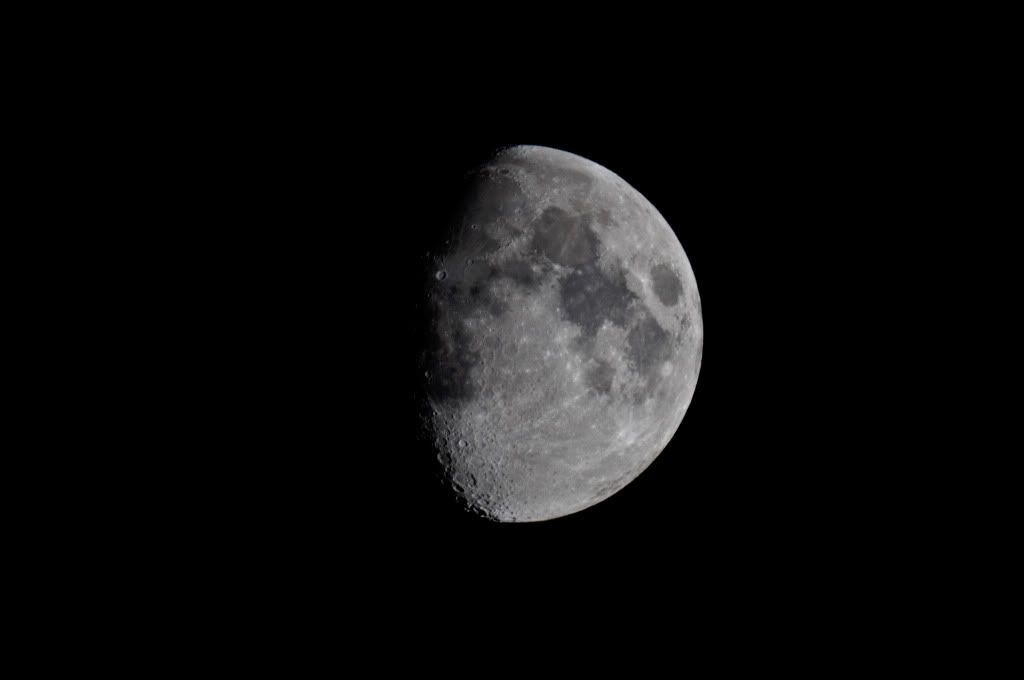
Lunar 9 - RC8 First Lunar Light

Here's a sneaky first light of my new 8" Ritchey Chrétien telescope. 
Torrent of posts to follow, I promise.


OTA: 8" Ritchey Chrétien
Camera: Nikon D3100 14.2mp
Mount: HEQ5
Exposures: 125
Exposure: 1/350sec
ISO: 100

3 September 2012

Lunar 9 - Foreground Detail

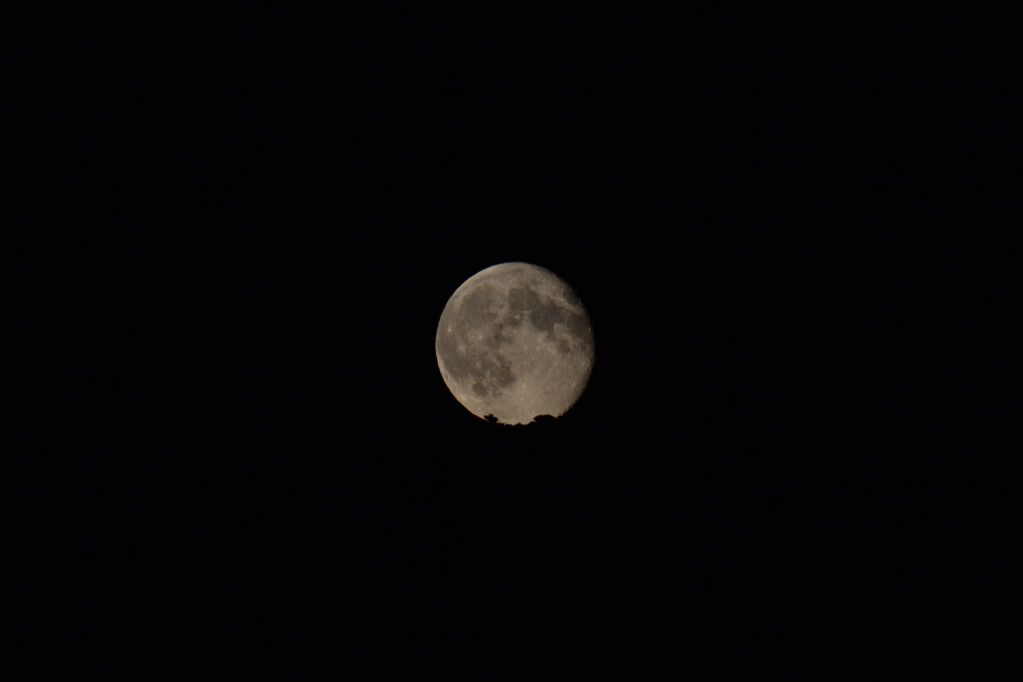
When imaging the moon, and especially at high magnifications, you really notice how fast the moon is travelling across the sky. When tracking the moon on a mount with the suitable tracking rate it's fine, but what about if you want to capture a shot of the moon rise with some terrestrial detail silhouetted against it?

That's when you only have a matter of minutes to take your shots, because that moon will be clear of the horizon so quickly. This is where that pesky culprit, moon glow, actually plays a helpful role. Before the moon actually starts to peak over the trees you will see the pale glow on the horizon first, giving you a little extra time to set up your scope.

I was learning all this on the fly, and was a little late adjusting my camera settings so all I was able to come away with was the following image. 


Next time I'll know to be ready, but these types of lunar photos offer huge scope for the imagination. Pardon the pun.

29 March 2012

Lunar 8 - Barlow Goodness

After getting my hands on the ED x3 Barlow lens I'm dying to get lots of Lunar and planetary work done. Here's a stack of an eighteen second .AVI of the Moon last night. Note that this is right in the inner city!

I'm so happy with the results from my Omni 120 and the CG-4 mount. The mount is especially good. It kept the moon in view as if there was no such thing as the earths rotation. Pat on the back for Celestron, in my mind.


OTA: 120mm Achromatic Refractor w/ 3x ED Barlow
Camera: Nikon D3100 14.2mp
Mount: CG-4 mount w/ motor drives
Exposures: 1
Exposure: 18sec approx .AVI Video
ISO: 100

7 February 2012

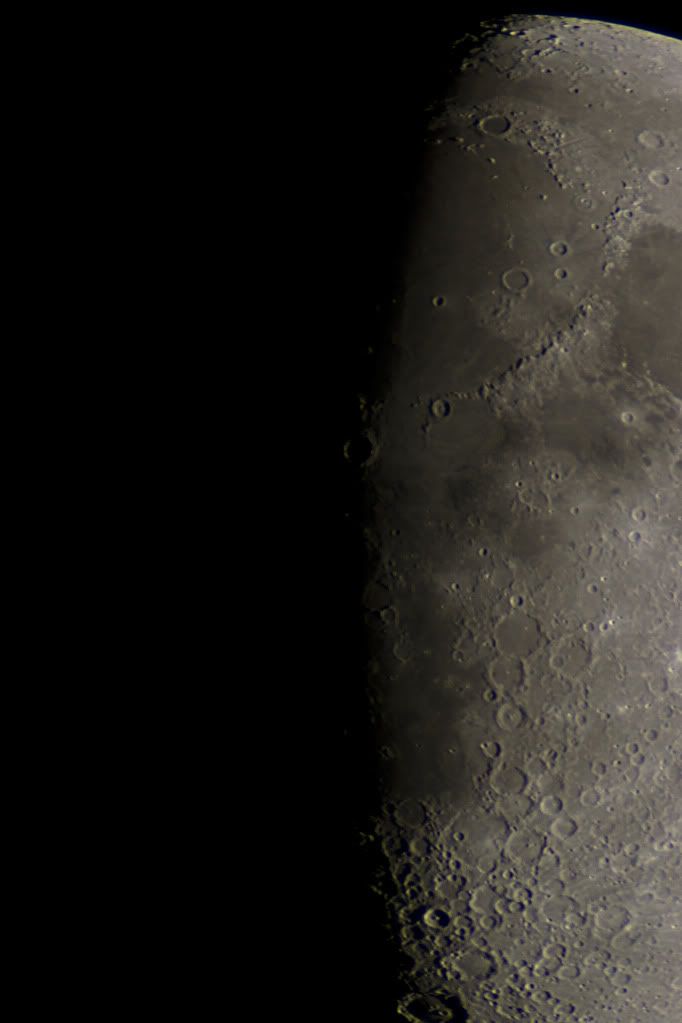
Lunar 7 - Moon Sandwich

I didn't realise it before but the images I stitched together make great photos themselves.
With a little extra sharpening and for your enjoyment, here they are;


OTA: 120mm Achromatic Refractor
Camera: Nikon D3100 14.2mp
Mount: CG-4 mount
Exposures: 12
Exposure: 1/30sec approx
ISO: 100


OTA: 120mm Achromatic Refractor
Camera: Nikon D3100 14.2mp
Mount: CG-4 mount
Exposures: 12
Exposure: 1/30sec approx
ISO: 100

I've got to say, although Registax is dealing with much of the chromatic aberration, I'm getting some very nice results with my Celestron achromat. I've got to big up the William Optics focuser too, of course.

2 February 2012

Lunar 6 - Success with Registax 6


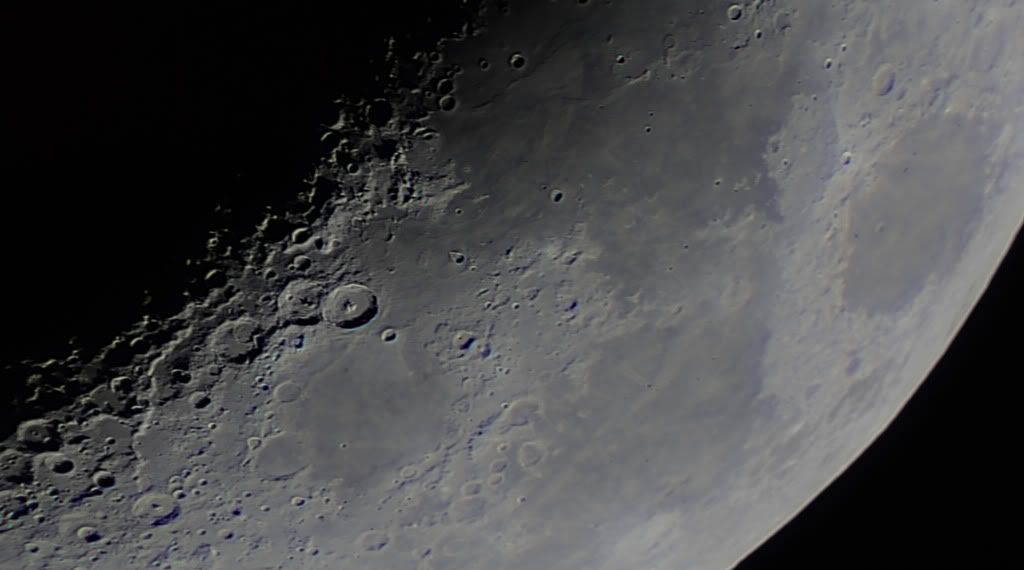
I think I've finally made my peace with Registax 6 and I'm getting some decent results! Had really great seeing conditions in Cork last night and thanks to my new WO crayford on my scope I could finally get things in amazing focus.

This image is a mozaic of two stacked AVI videos at around four seconds each. Stacked in Registax and stitched together and colour corrected in Photoshop.


OTA: 120mm Achromatic Refractor
Camera: Nikon D3100 14.2mp
Mount: CG-4 mount
Exposures: 24
Exposure: 1/30sec approx
ISO: 100

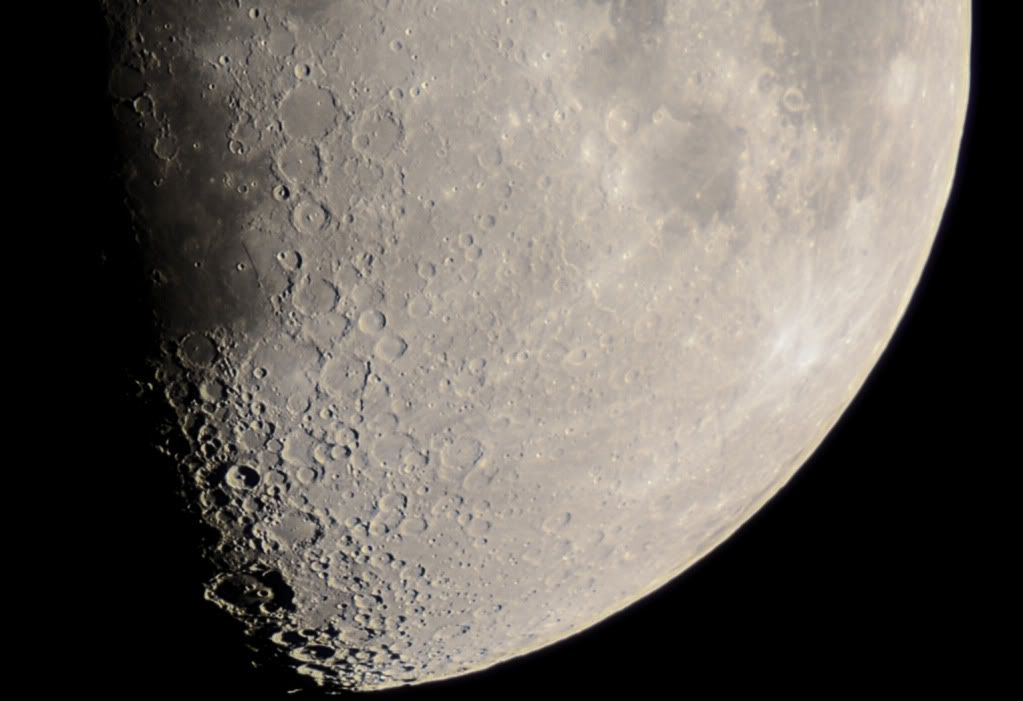
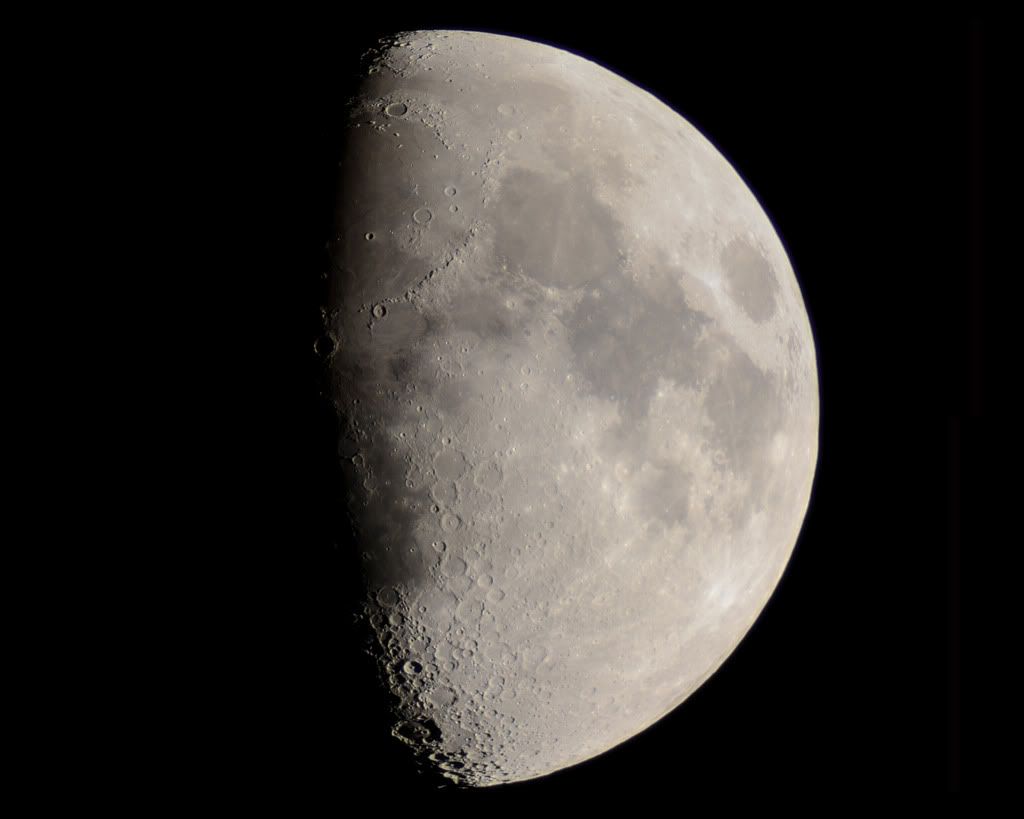
Lunar 5 - Half-ish Waxing Gibbous Moon

Here's a single frame from my Nikon D3100 on prime focus. Nice result for single frame I thought.


OTA: 120mm Achromatic Refractor
Camera: Nikon D3100 14.2mp
Mount: CG-4 mount
Exposures: 1
Exposure: 1/30sec approx
ISO: 100

Standby for some satcking!

13 December 2011

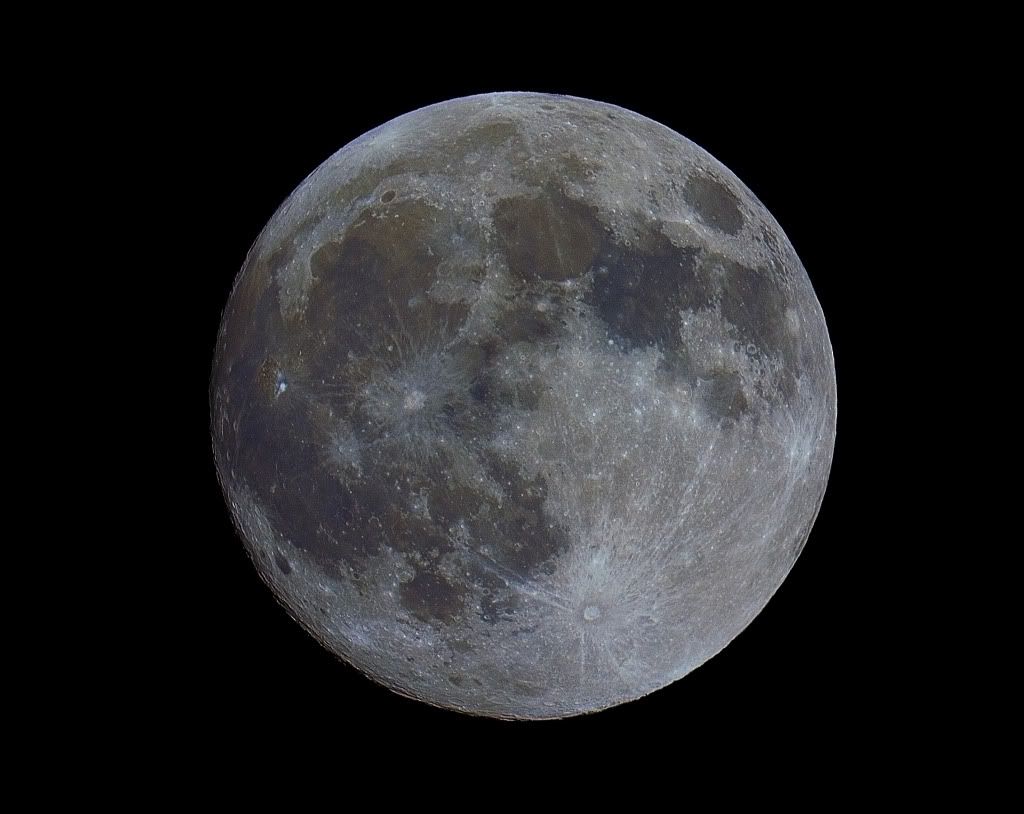
Lunar 3 - Image Stacking

I must say the Moon really is becoming one of my favorite objects to photograph and I think this is my best one yet!


OTA: 120mm Achromatic Refractor
Camera: Nikon D3100 14.2mp
Mount: CG-4 mount
Exposures: 12
Exposure: 1/100sec
ISO: 100

This one however is different from my previous efforts because it's actually twelve separate images stacked together.

This magical process can be done in a delightful freeware image processing program called Registax. "Oh, that sounds interesting" you might say, but no. This is the single most frustrating program I've used since Adobe Illustrator! I'll spare the rant but you do need a liberal amount of patients to learn how to get good results from this program. However, like Illustrator, with countless hours and the help from online tutorials I finally managed to render out this image of our beautiful and full moon.

It just so happened that there was a Lunar eclipse that day, which I unfortunately missed due to weather. I was all ready to make an animation of the event and everything.

24 November 2011

Lunar 2 - The Moon, again

After finally getting my hands on my new DLSR, a Nikon D3100, I was excited to see the difference between the photo I had taken through the eye piece of my telescope with my phone, and one taken with my new camera through prime focus photography. This means attaching the camera directly to the telescope using an adapter.

Here is the result:


OTA: 120mm Achromatic Refractor
Camera: Nikon D3100 14.2mp
Mount: CG-4 mount
Exposure: 1/2sec approx
ISO: 800

It's easy to see that the result is much better. I took this photo while the moon was waxing, which gives much more detail in the craters.

How far we've come

These days it's common place for any amateur astronomer to go out with their telescope and CCD camera or DSLR and image planets and other astronomical objects. Back in the eighteenth century however it wasn't as easy.

I spotted this silver emulsion photographic plate image of the moon taken through the giant refractor in the last post. What would Howard Grubb have said if he saw us looking at a photo of the moon in a DSLR screen and deleting it because the exposure was a little too short or something. 

It's really amazing how easy it is for us now, to do meaningful astronomy and astrophotography.


8 November 2011

Lunar 1 - First Light

Due to the weather, the first and only objects I was able to view in any great detail were the moon and Jupiter again. However I wasn't disappointed at all! My new telescope outshone my neighbours one spectacularly, showing amazing detail and clarity.

I took a quick snap through the eyepiece with my phone, which became my first astro-photograph.


OTA: 120mm Achromatic Refractor
Camera: HTC Sensation 8mp
Mount: CG-4 mount
Exposure: Unknown
ISO: Auto


I was amazed at the detail and wondered how much better it would be using my DSLR attached to the prime focus. This image incidentally also became my phone wallpaper for a time.

6 November 2011

Jupiter and the Moon

Finally! A night of clear skies came and I rushed outside with my neighbours telescope to see what I could see. I didn't know the sky, so in moth like fashion I went straight for the brightest objects.

I was able to make out the craters on the moon quite nicely through the 70mm refractor, then I turned to the next brightest object I could see; Jupiter. More than anything else, the view I had of the gas giant made me want to know and see everything I could of the cosmos.

People do say that when you see Jupiter, with it's reddish brown bands and it's moons, or Saturn and it's rings; you're hooked! That's exactly what happened to me.

Quite inspiring stuff! And I just had to show off my new soon-to-be-hobby with two consecutive home made wallpapers for my phone.