Find us on Google+ Astronomy Box: galaxy
Showing posts with label galaxy. Show all posts

4 April 2013

NGC4762 & NGC4754

Now that spring is upon us, some fabulous galaxies are beginning to make their way into our skies at night. I've been really eager to use my newly bought Atik 16IC CCD camera and we haven't been having the best of weather lately. Last night though the sky was cloud free.


I setup my gear and opened Stellarium. As my site is restricted to pretty much the whole easterly sky I turned my attention to the bright star Arcturus, which has a lot of galaxies and globular clusters near it. Using the stars Arcturus and Muphrid as a guide I found my way slowly into the swarm of galaxies, where I immediately settled on NGC4762 & NGC4754. In fact, this is the fastest I've ever found an object I hadn't observed before, and that's without any GOTO.
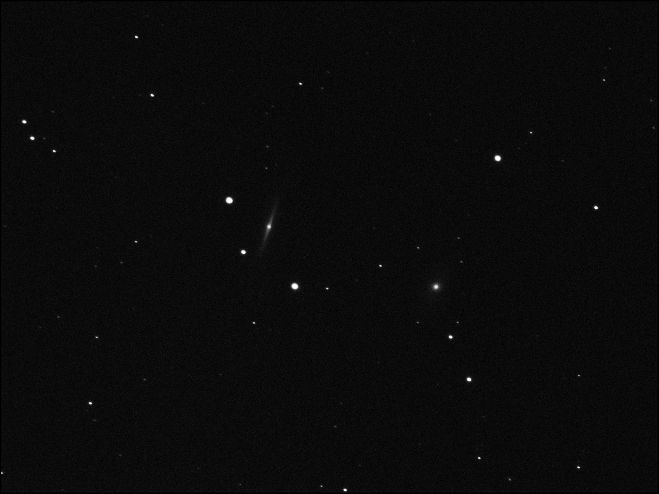


OTA: WO 72mm Megrez w/ Moonlite Focuser & SkyWatcher FF & LPR Filter
Guiding: TS 9mm OAG w/ Orion starshoot
Mount: HEQ5 Pro w/ EQMOD
Camera: Atik 16IC Mono
ISO: N/A
Subs: 10x30s
Darks: N/A
Flats: N/A
Bias: N/A
Processing: Nebulosity
Post-processing: Photoshop

I realise now that I don't have near enough data so next time I'll be fetching more.

21 July 2012

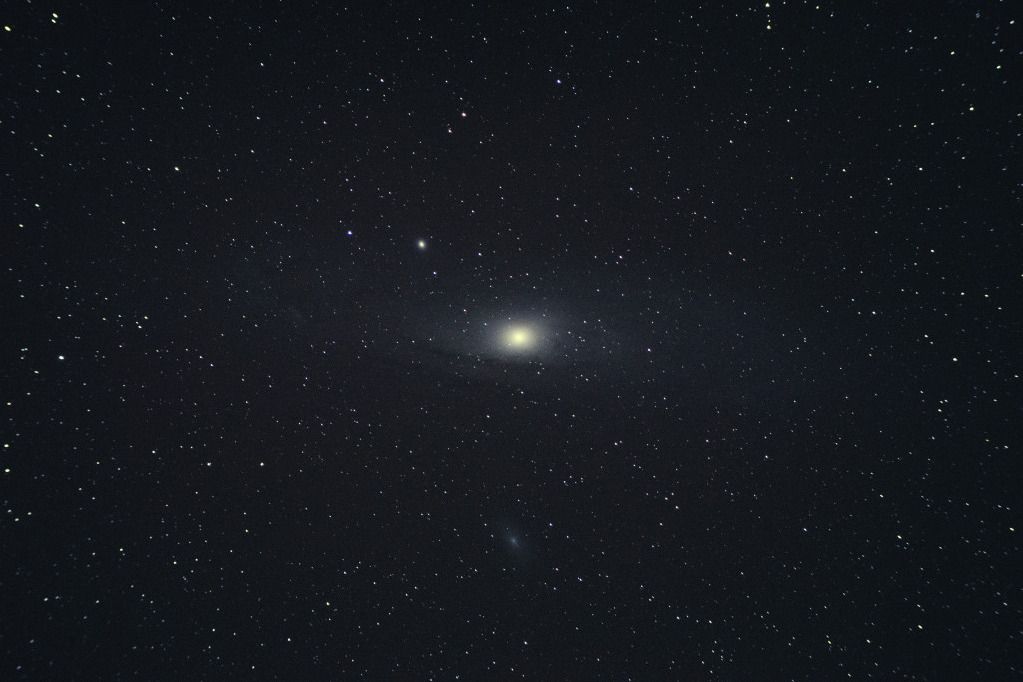
DSO 2 - My First M31 Andromeda Galaxy Image

Last night we finally saw an end to the seemingly perminent grey weather and were blessed some some clear skies. I've been itching to give my Megrez 72 it's first imaging run and chose M31 as my target, as it was positioned very conveniently in the sky. Here are the results


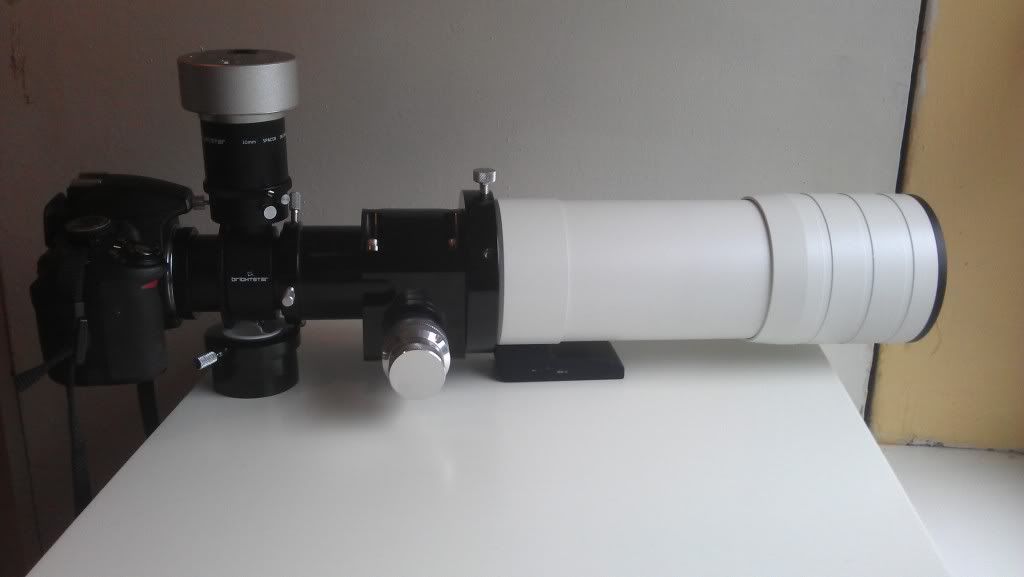
OTA: WO 72mm Megrez w/ Moonlite Focuser
Camera: Nikon D3100 14.2mp
Mount: HEQ5 Pro
Exposures: 1
Exposure: 1min
ISO: 3200

My next goal is a guided image of M31 using an OAG and Orion Starshoot Autoguider.


I foresee that acquiring a guide star will prove difficult, as I learned last night while trying to use PHD. However, I'm sure with a little patience and luck I'll succeed.

27 November 2011

Wide Field 1

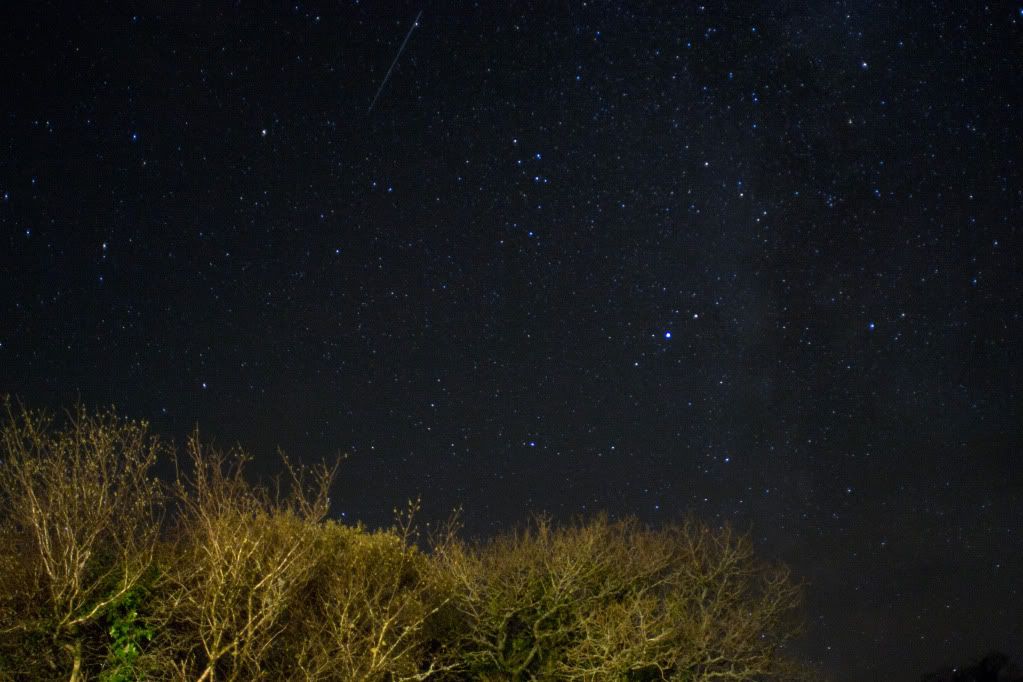
We got a nice break in the clouds in West Cork over the weekend and I took this photograph:


Camera: Nikon D3100
Lens: 20mm F2.8
ISO: 1600
Exposure: 15sec
Mount: Manfrotto

The milky way is just visible on the right and the line at the top of the image is most likely a satellite, specifically one called Cosmos 1812 or Cosmos 1500 according to Stellarium

6 November 2011

Jupiter and the Moon

Finally! A night of clear skies came and I rushed outside with my neighbours telescope to see what I could see. I didn't know the sky, so in moth like fashion I went straight for the brightest objects.

I was able to make out the craters on the moon quite nicely through the 70mm refractor, then I turned to the next brightest object I could see; Jupiter. More than anything else, the view I had of the gas giant made me want to know and see everything I could of the cosmos.

People do say that when you see Jupiter, with it's reddish brown bands and it's moons, or Saturn and it's rings; you're hooked! That's exactly what happened to me.

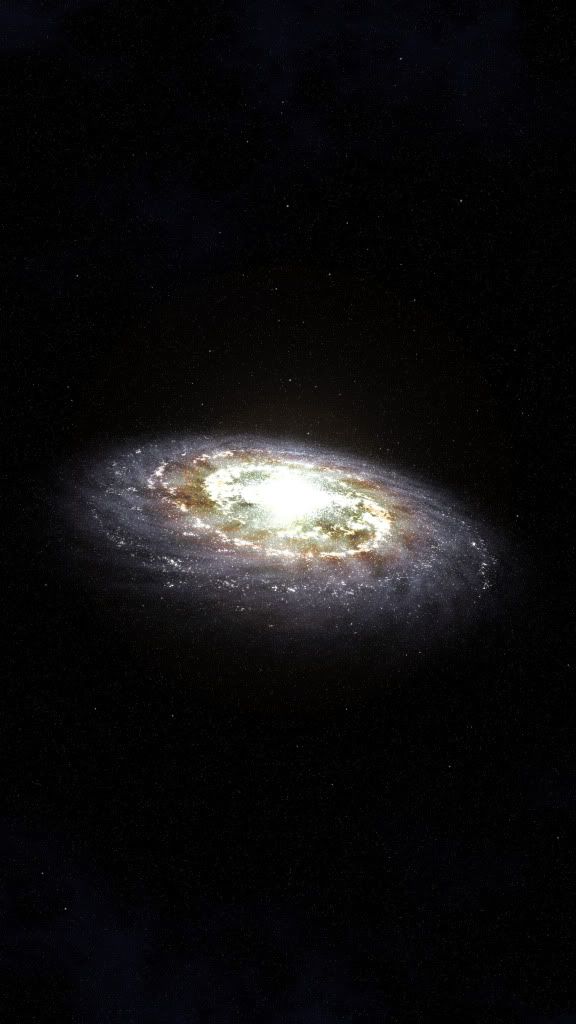
Quite inspiring stuff! And I just had to show off my new soon-to-be-hobby with two consecutive home made wallpapers for my phone.