Find us on Google+ Astronomy Box: celestron
Showing posts with label celestron. Show all posts

13 December 2011

Lunar 3 - Image Stacking

I must say the Moon really is becoming one of my favorite objects to photograph and I think this is my best one yet!
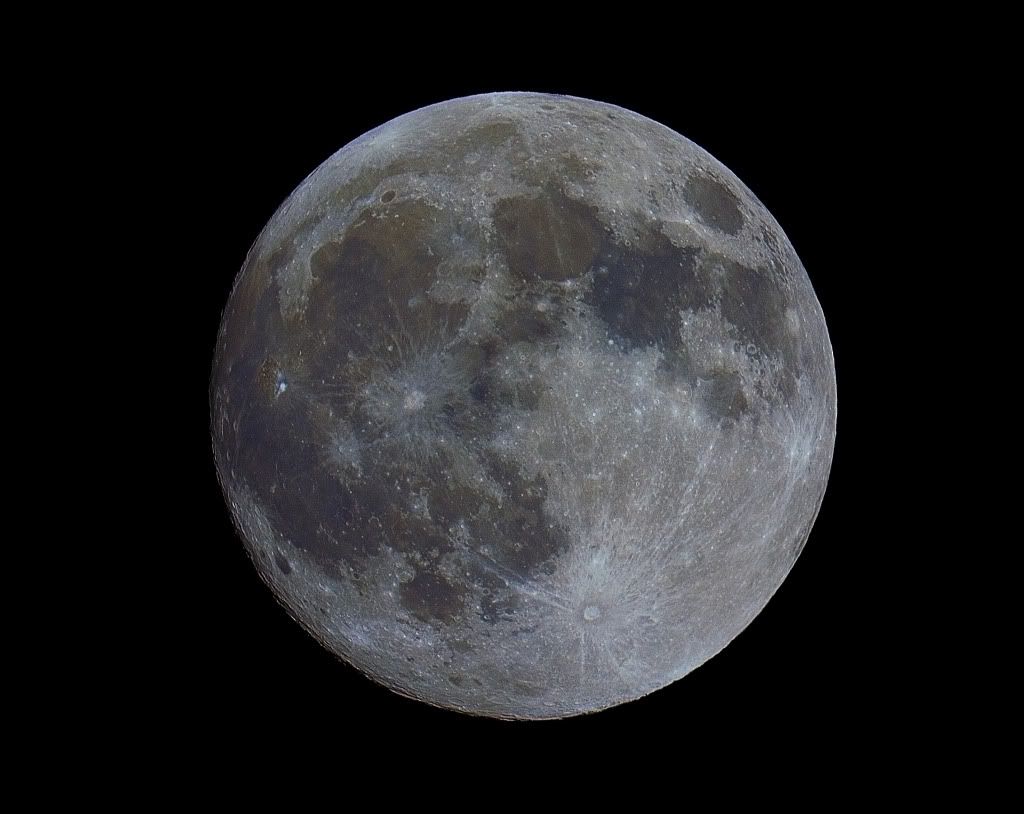


OTA: 120mm Achromatic Refractor
Camera: Nikon D3100 14.2mp
Mount: CG-4 mount
Exposures: 12
Exposure: 1/100sec
ISO: 100

This one however is different from my previous efforts because it's actually twelve separate images stacked together.

This magical process can be done in a delightful freeware image processing program called Registax. "Oh, that sounds interesting" you might say, but no. This is the single most frustrating program I've used since Adobe Illustrator! I'll spare the rant but you do need a liberal amount of patients to learn how to get good results from this program. However, like Illustrator, with countless hours and the help from online tutorials I finally managed to render out this image of our beautiful and full moon.

It just so happened that there was a Lunar eclipse that day, which I unfortunately missed due to weather. I was all ready to make an animation of the event and everything.

24 November 2011

Lunar 2 - The Moon, again

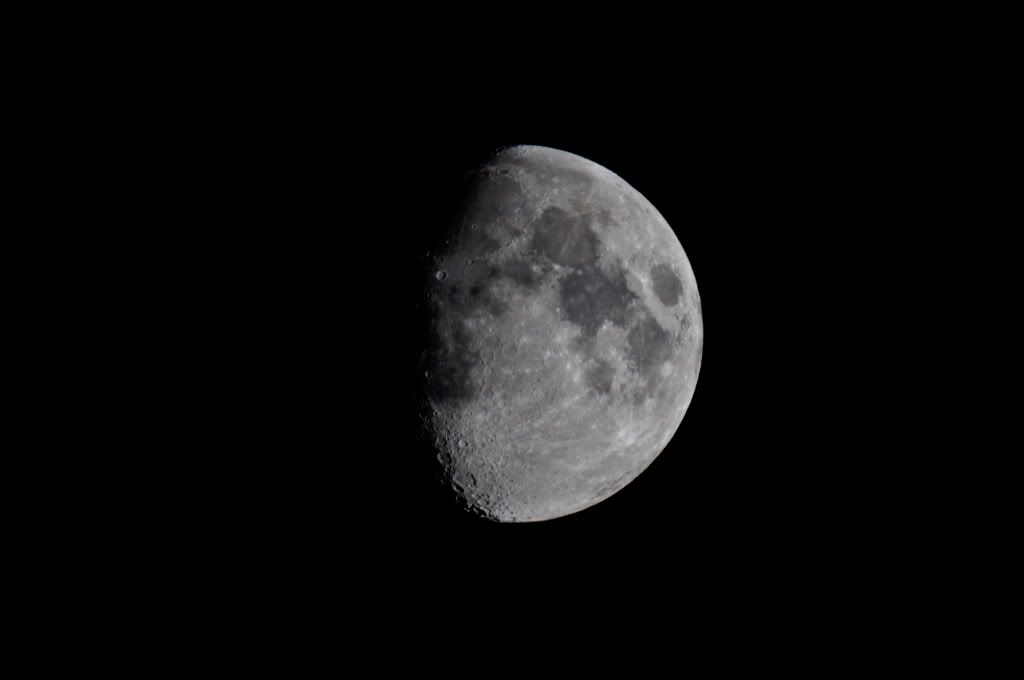
After finally getting my hands on my new DLSR, a Nikon D3100, I was excited to see the difference between the photo I had taken through the eye piece of my telescope with my phone, and one taken with my new camera through prime focus photography. This means attaching the camera directly to the telescope using an adapter.

Here is the result:


OTA: 120mm Achromatic Refractor
Camera: Nikon D3100 14.2mp
Mount: CG-4 mount
Exposure: 1/2sec approx
ISO: 800

It's easy to see that the result is much better. I took this photo while the moon was waxing, which gives much more detail in the craters.

8 November 2011

Telescope Time

It arrived, and within just a couple of days of ordering it, the rather large and heavy Celestron labelled boxes were splayed out on my bed ready for unpacking.


I  don't think I've ever opened anything more carefully in my life, but there it was; my very first telescope.


I should explain, after a burst of inspiration I fashioned a handy phone cradle which I could piggy-back on the top of my telescope in order to make use of those ever so useful sky map apps.

Research

Now I knew I wanted a telescope of my own, and it was time to do some research. Lot's of research! You know when you're about to make a big purchase and you spend every available second of computer time absent mindedly Googling the hell out of it? That was me.

After much Google time and posing annoying questions to some professional and amateur astronomers I had an idea of what I wanted out of my telescope.

One:
I was recommended a GOTO system early on but I wanted to learn the sky and felt that I'd benefit much more from a manual set up.

Two:
I also had a great interest in astrophotography so I needed a telescope which would allow me to eventually attach my camera to it and so I could image celestial objects. This, to me, meant I would need a German Equatorial mount.

Three:
I'm not sure why, but my heart seemed to sway toward a refracting telescope. From what I read on the forums, refractors seemed to be the favourite of astrophotographers. I also like this optical system because it seemed like the most portable and low maintenance.

Following these three informed decisions, more Google time ensued. This time however I was working my way through various online astronomy stores, weighing up prices, and homing in on the telescope that I would finally buy.

It was at home in Ireland however, where I bought my telescope. Thanks to the great help and advice of the folks at Astronomy Ireland in Dublin, I made my final decision.

Drum role!

My telescope would be a Celestron Omni XLT 120mm reftracting telescope.