Below is the final video, as well as a blog article I wrote for the Skellig Star Party website.
The 2015 Solar Eclipse


Showing posts with label UCC. Show all posts
Showing posts with label UCC. Show all posts
25 March 2015
The 2015 Solar Eclipse - SSP
Unlike the most of the country, the clouds parted just in time for the solar eclipse this month and I managed to produce a pretty decent time-lapse of it before we got completely clouded out.

10 February 2015
Crawford Observatory UCC, Cork

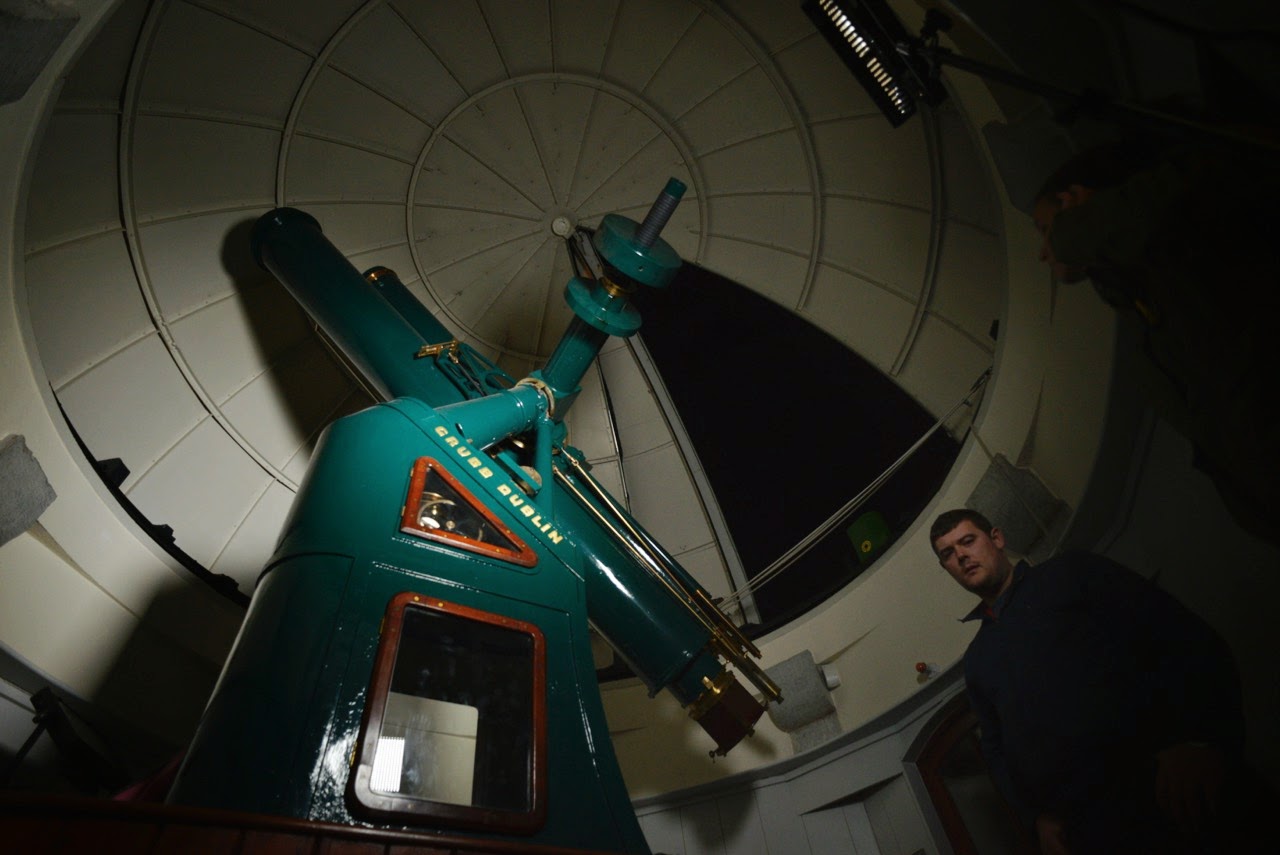
Had an interesting night recently shooting timelapses from inside the Crawford Observatory recently. Being right in the middle of the city it was somewhat of a challenge to get the right exposure. It turned out pretty well however, with a little bit of post processing magic we were able to bring out the night sky nicely, without affecting the foreground image. I should also add that the moon was out, so not a bad result considering the conditions.

Not too shabby at all.
19 May 2013
A Week In Tenerife - The Mt Tiede Observatory Part 5
Finally, it's my great pleasure to show you all the fruits of our labor on the Tenerife trip. I hope this journey will help and inform anyone considering studying physics or astronomy, or a trip to Tenerife for that matter.
Enjoy!
Enjoy!
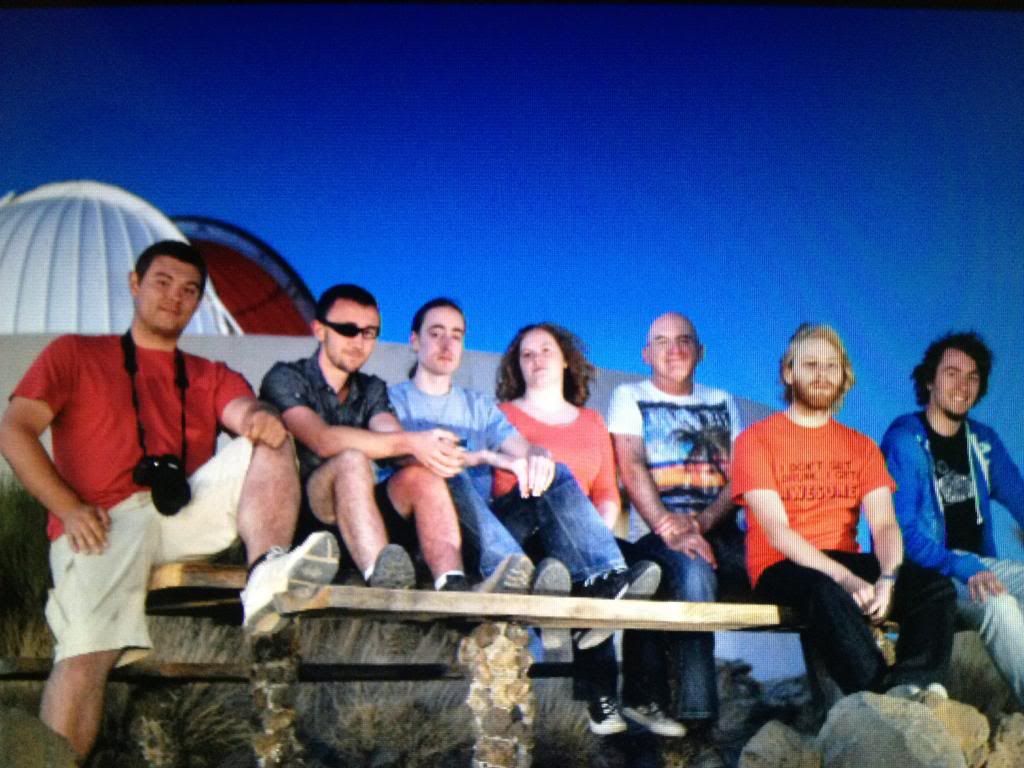 |
| The team outside the telescope dome. That's me on the left! |
22 October 2012
A Week In Tenerife - The Mt Tiede Observatory Part 1
I don't have any aspirations to be a travel writer, but I think I have found the exception.
A few weeks ago I had the great pleasure of accompanying a group of physics students from UCC on a trip to the Observatorio del Teide, an IAC run observatory perched high up on Mt Teide, Tenerife. There were eight of us in our party. Five students, Dr. Paul Callanan, Stephen Bean (The university film maker) and myself. My role over the seven days was mainly as the filming assistant and sound technician, that is to say; holding the microphone in the interviewees faces. I also had my own, nocturnal agenda.
We would set out from Dublin airport. The flight which was just over four hours, took us to the Canaries and the island of Tenerife. On approach, noticing the gigantic conical volcano of Mt Teide is unavoidable. It rises high out of the clouds where the inversion zone prevents low hanging cloud from rising up the slopes. It is truly breathtaking.

Accommodation for the film crew (Myself and my father) consisted of B&B style lodgings in a little village called Arafo, which is situated about 4km inland and about 500m up the side of the island. Although this meant a forty minute drive up and down from the observatory every day, it gave us some great opportunities to film some scenic shots and cut-aways. I will forever associate popping ears and the smell of roasted break pads with Tenerife. The science team meanwhile, stayed in the accommodation provided by the observatory itself. This consists of La Residencia and some communal dorms, both of which are available at varying, but not wholly unreasonable rates.

The observatory itself is amazing. With over twenty telescopes, the landscape is dotted with the familiar white domes, and some with very unusual enclosures. When visiting the observatory during the day, we could watch the various solar telescopes tracking the sun throughout, from morning until the evening. In fact the most unusual structure I had seen belonged to one of these solar scopes. The 70cm VTT or Vacuum Tower Telescope.
While the astronomers sleep during the day, those with scheduled telescope time during the night would actually rise a number of hours before sundown in order to make sure the telescope is running smoothly and to take calibration images. This was no different for our group of physics students. The evenings, or morning for them, would generally consist of calibration, dinner and then back to the telescope to get ready for the nights observing. The telescope we had booked observing time on, was the IAC80.
The IAC80 is an 82cm cassagrain type telescope and sits on a quite unusual German equatorial mount. Unusual, because the scope itself is held by a fork and the fork is situated where the polar scope would be on a more familiar amateur German equatorial mount. Construction of this particular telescope began in 1980, and was finally completed in 1991. A fun bit of trivia; because it took so long to complete, it was given the symbol of a snail.
Although the whole trip was scientifically a success, the observing nights were not without glitches. The IAC80 proved to be a little temperamental during our visit and we encountered a few minor issues, such as a dome that refused to rotate, refused to stop rotating, some software issues and one night, some high altitude cloud rolled in to cut the end of the night short. Obviously they weren't able to control the weather, but our fantastic telescope operators were ever at hand to help out and get the observing back on track.
In all, the IAC80 provided the team with sufficient data of a black hole binary system called SWIFT J1910.2-0546, which was the primary target for the whole trip. It also produced some excellent images of various deep sky objects, including the pillars of creation in M16 The Eagle Nebula.
In part two I will write about the science in a bit more detail and post some images the team was able to acquire. I was also able to do some astrophotography of my own which I will include.
We would set out from Dublin airport. The flight which was just over four hours, took us to the Canaries and the island of Tenerife. On approach, noticing the gigantic conical volcano of Mt Teide is unavoidable. It rises high out of the clouds where the inversion zone prevents low hanging cloud from rising up the slopes. It is truly breathtaking.
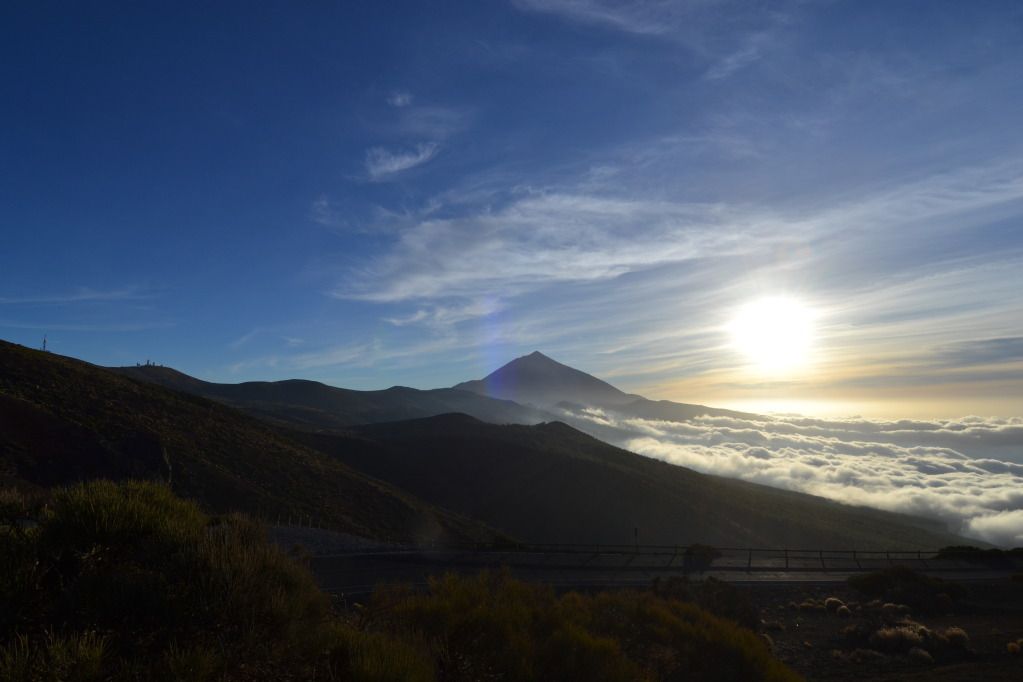 |
| This photo, for me really encapsulates the majestic beauty of the island of Tenerife. You can just see the observatory to the left of Mt Teide. If I could choose one place in the world as my office, this would be it. |


The observatory itself is amazing. With over twenty telescopes, the landscape is dotted with the familiar white domes, and some with very unusual enclosures. When visiting the observatory during the day, we could watch the various solar telescopes tracking the sun throughout, from morning until the evening. In fact the most unusual structure I had seen belonged to one of these solar scopes. The 70cm VTT or Vacuum Tower Telescope.
 |
| The enormous structure, housing the VTT solar telescope |
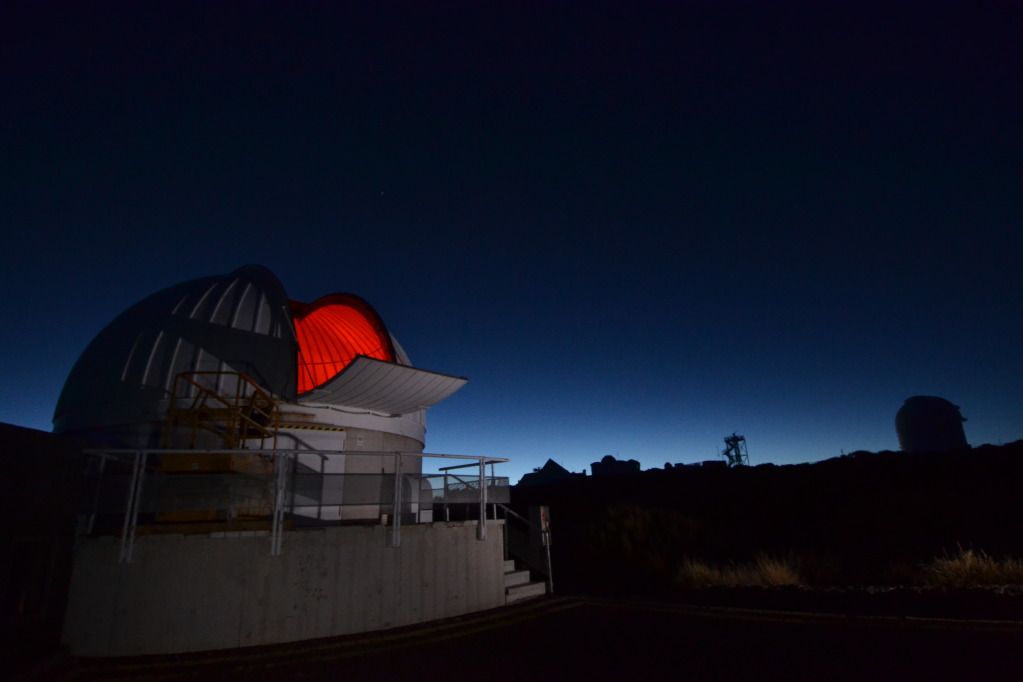 |
| The open dome of the IAC80 |
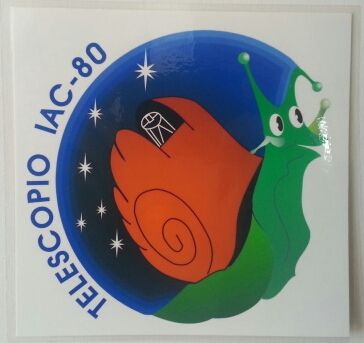 |
| The IAC80s snail symbol on the door of the dome building. |
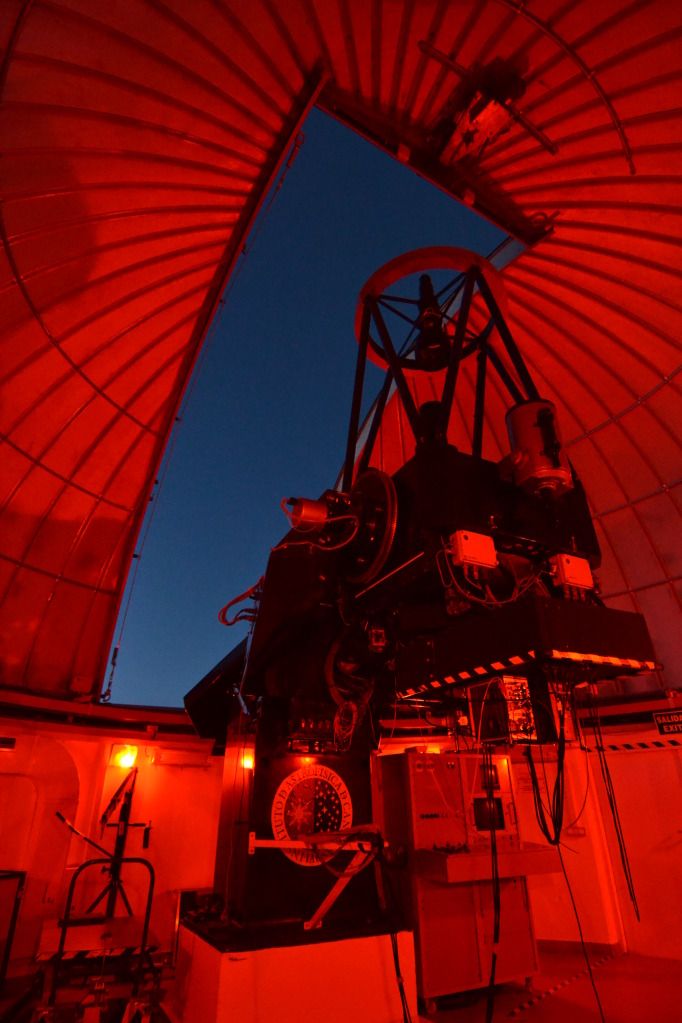 |
| An amazing bit of mechanical and optical engineering. The IAC80 under the sky and washed with the red light of the dome. |
In part two I will write about the science in a bit more detail and post some images the team was able to acquire. I was also able to do some astrophotography of my own which I will include.
2 March 2012
UCC Transition Year Astronomy Module

A new transition year astronomy module has been designed and launched in a collaboration between Irish physics teachers, The Science Foundation of Ireland and the physics Dept. at UCC.
Serving as a broad introduction to the field of astronomy and astrophysics, students will conduct experiments, learn about the planets and their movements, and learn about the physics which govern our universe.
This fantastic module is the brain child of Dr. Paul Callanan and I just wish had been available when I was in school.
All the necessary information about the module can be found right here
21 February 2012
Solar Maximum 2012
University College Corks very own Dr. Paul Callanan talks about this years solar maximum, coronal mass ejections and the resulting displays on earth, known as the aurora borealis.
Paul is also in charge of the X-Ray Binaries Research Group in UCC
24 November 2011
I met a NASA Astronaut
It just so happened that my visit to the Crawford Observatory coincided with a visit from NASA astronaut Shane Kimbrough which was very exciting. He gave a talk to the physics students of UCC, and me hiding in the back, and answered many questions about his experiences as an astronaut which was incredible to hear from someone who's actually been "up there".
After a short interview, as time was short, we were able to grab him for another great photo opportunity for my blog. The fact that I'm wearing a blue t-shirt matching the blue of the ISS suit is entirely coincidental.
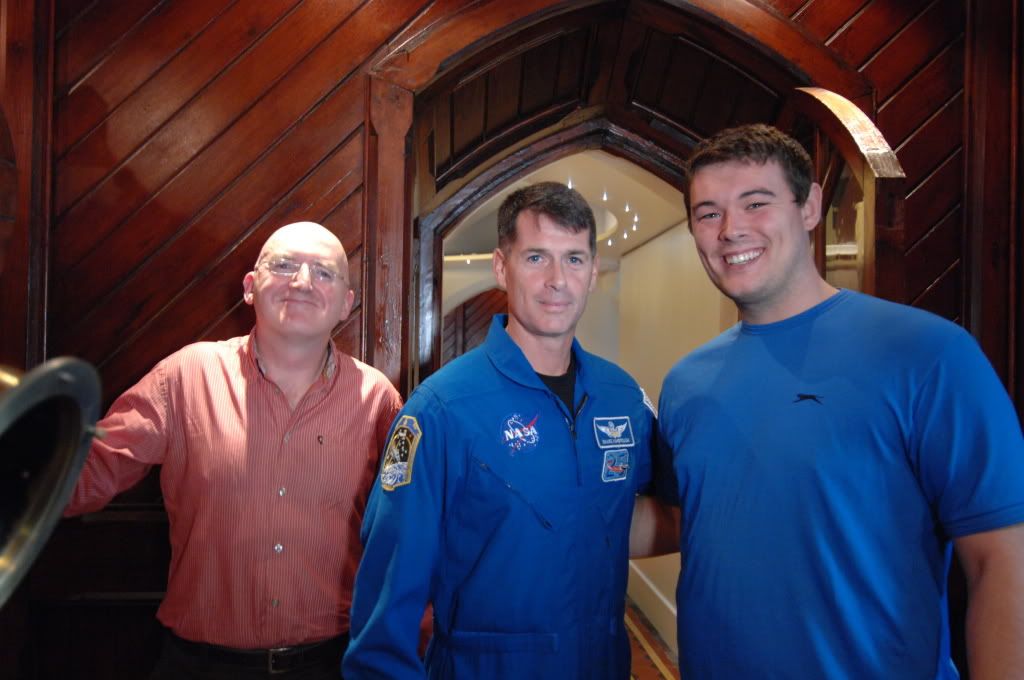 |
| Left-Right:Prof. Paul Callanan, Lt. Col. Shane Kimbrough, Me. |
Here is the interview which can also be viewed on the UCC youtube channel:
How far we've come
These days it's common place for any amateur astronomer to go out with their telescope and CCD camera or DSLR and image planets and other astronomical objects. Back in the eighteenth century however it wasn't as easy.
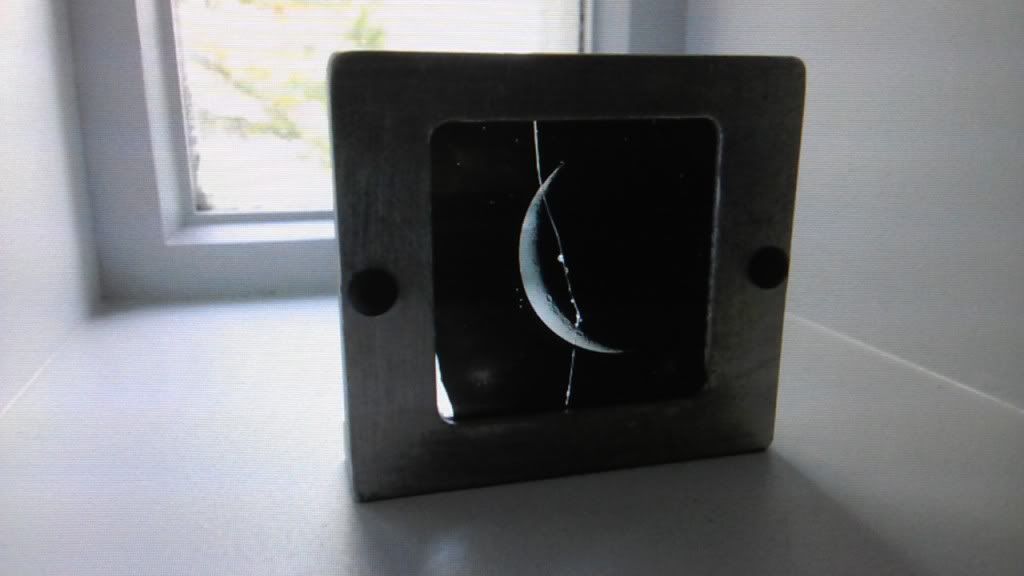
I spotted this silver emulsion photographic plate image of the moon taken through the giant refractor in the last post. What would Howard Grubb have said if he saw us looking at a photo of the moon in a DSLR screen and deleting it because the exposure was a little too short or something.
It's really amazing how easy it is for us now, to do meaningful astronomy and astrophotography.
UCC Crawford Observatory
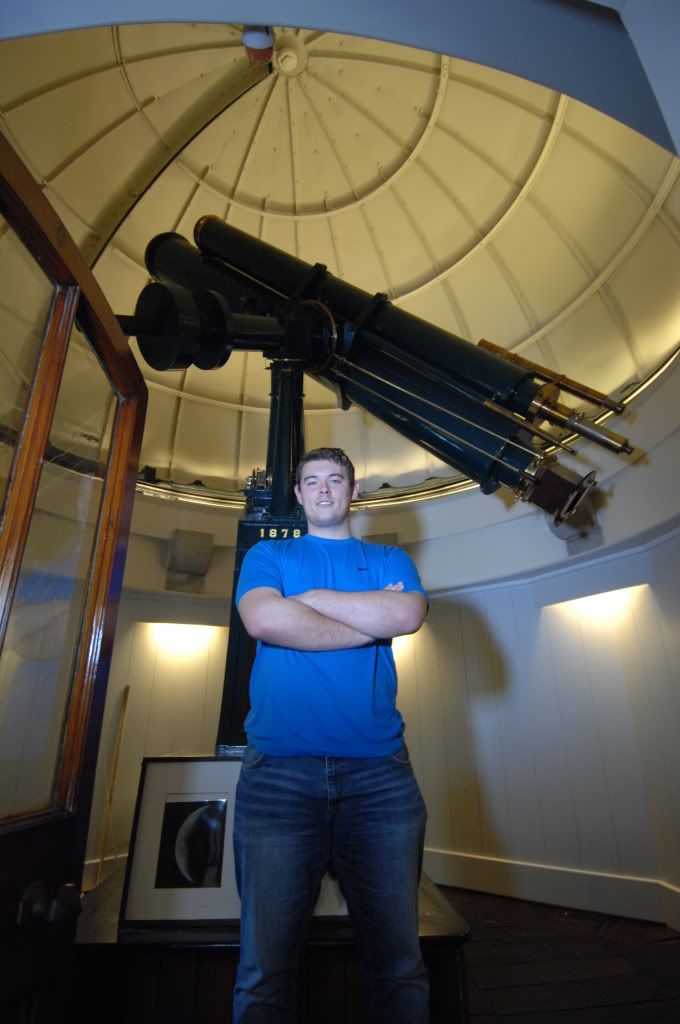
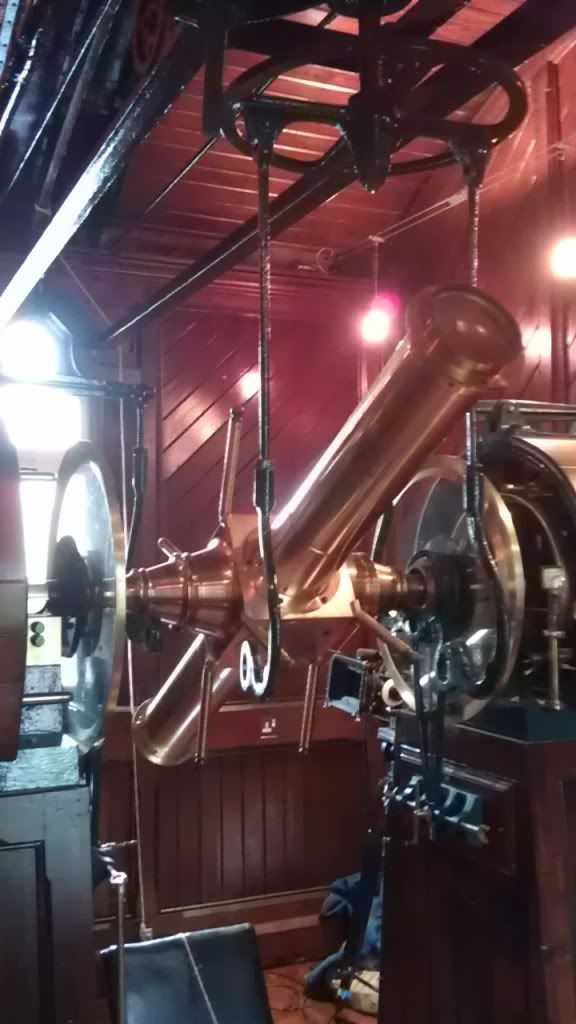
I had the pleasure of visiting the UCC Crawford Observatory in Cork city, Ireland recently. As my dad was filming there on the day I took the chance to visit and view some of the most amazing antique telescopes I've ever seen, dating back to the late eighteen hundreds. Among them was a gigantic equatorial refracting telescope and a spectroscope, all hand made by Irishman Howard Grubb, who was well known for his work with various optical systems.


As it was during the day we weren't able to use any of the telescopes and I'm not even sure if they are still functional but I took advantage of the photo opportunity.
Subscribe to:
Posts (Atom)